)
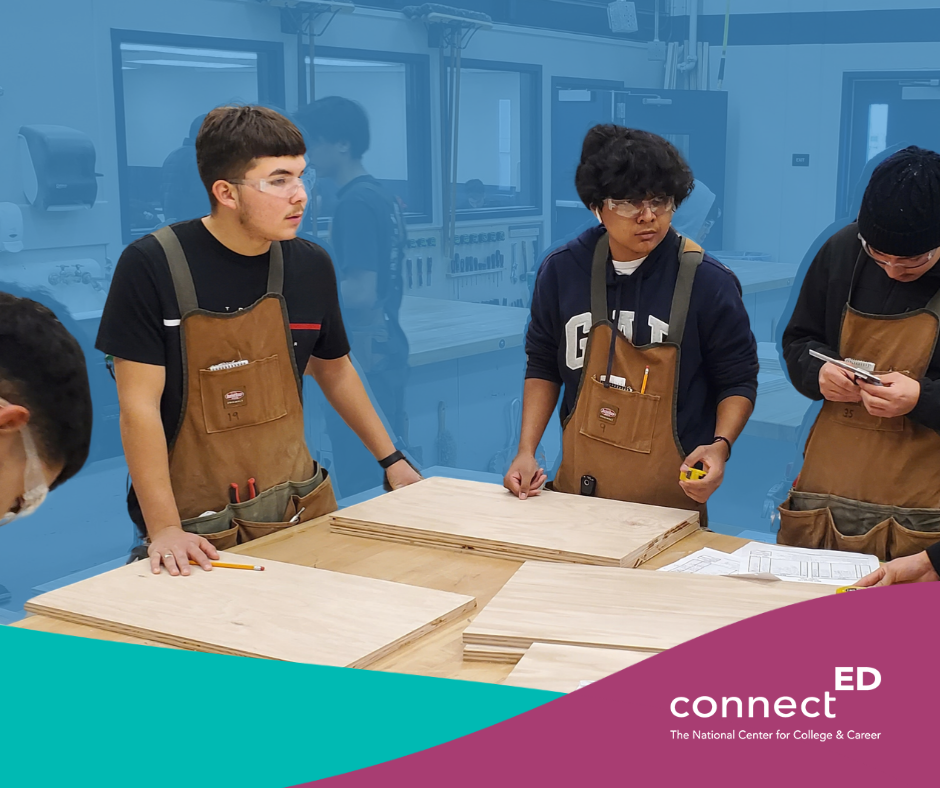
At Porterville Unified School District (PUSD), “Empower the Future” is more than a catchy motto—it is a rigorous, systems-level blueprint designed to ensure every student graduates ready for the world. To ensure its college and career pathways align with its mission, PUSD has institutionalized a year-long continuous improvement process.
As the school year launches, so too do their stakeholder meetings; in July, district and school leaders came together to make sense of all they’ve learned from a year of stakeholder self-assessments, data reviews, and cross-role meetings. By fall they established a new set of improvement goals for the year and this spring, they will review and reflect on their improvement and learnings.
By synchronizing district and site administrators, pathway leads and teachers, and industry Advisory Board and Council members around a common set of criteria, PUSD has created a coherent ecosystem where student outcomes are the only metric that matters.
Pillars of Pathway Quality
How do we define “excellence”? PUSD uses a specialized rubric developed from partner frameworks, including our Quality Frameworks designed for each level of the system to move pathways from “Foundational” to “Fully Developed.” This prevents “islands of excellence” and ensures a unified experience across the district. Porterville’s areas of focus include:
1. Leadership & Culture
Distributed leadership drives the system. When administrators and counselors engage in collective problem-solving, their Graduate Profile outcomes move from posters on the wall to actual skill attainment in the classroom.
ConnectED Resource: District Framework
2. Instructional Excellence
Excellence is an output of support. By prioritizing Project-Based Learning (PBL) and strong intervention systems, pathways can drastically reduce D/F rates. When students have assigned academy assistants and common planning time for teachers, they don’t just start the four-year sequence—they finish it.
ConnectED Resource: Community of Practice Framework
3. Industry & Work-Based Learning (WBL)
A pathway is only as strong as its connection to the real world. By collaborating with Industry Advisory Boards, PUSD ensures that 100% WBL participation—including internships and industry tours—is a reality for students, backed by professional certifications.
ConnectED Resource: Work-Based Learning Systems Continuum
Precision Through SMART-E Goals
While the cycle provides the rhythm for improvement, the SMART-E framework provides the precision. PUSD has adopted the traditional SMART goal framework and added a critical fifth element to the traditional model: Equity.
The Equity Focus: We use data to break down barriers. This means actively balancing gender demographics in pathways like Academy of Energy and Resource Occupations (AERO) and Porterville Academy of Health Science (PAHS), and targeting academic bottlenecks—specifically in Math—to ensure no student is left behind.
Successes and the Path Ahead
The results of this rigorous analysis are clear; growth requires honest reflection. Though one of the most mature Linked Learning districts in California, Porterville Unified continues to address systemic challenges and logistical bottlenecks, such as transportation barriers for off-site learning and the need for pathway-specific parent communication, and to set priorities for action and improvement, including direct mentoring for students, data-driven interventions in classrooms, and increasing the number of students who qualify for the State Seal of Civic Engagement.
Continuous improvement at PUSD isn’t a one-time event; it’s a permanent year-long cycle. By refining its systems, PUSD isn’t just adopting pathways as a program for some students rather it’s restructured its entire system to ensure every student it serves is empowered to reach their future goals, regardless of their chosen pathway.